
- Israeli airstrikes on Syrian Iranian-linked bases underscore a volatile regional reordering.
- Turkish and Arab youth are revolutionizing protest by fusing digital media with raw dissent.
- New Social Movement and Framing Theories reveal how affect and identity shape modern resistance.
- Repression is rebranded as nuanced narrative warfare, intensifying state–society confrontations.
From Kefaya to TikTok Revolt? Youth, Protest, and the Unseen Politics of the Middle East
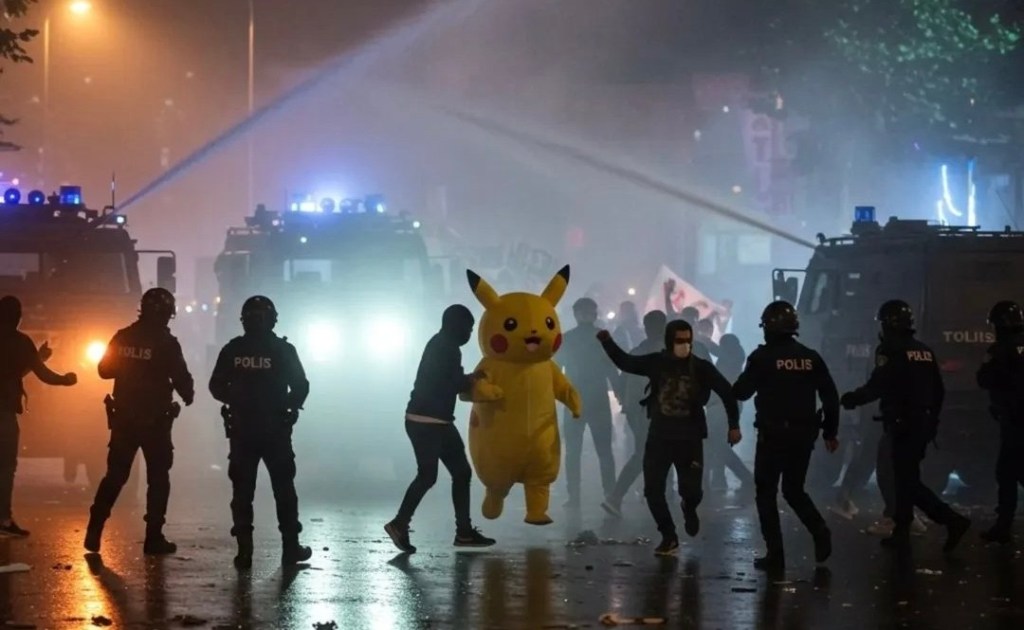
They’re not just dancing—they’re dissenting. While governments across the Middle East and Türkiye seek to control streets, students, and screens alike, a new political aesthetic is emerging among youth. In Türkiye, fresh waves of university activism—most recently around #Barınamıyoruz (“We Can’t Shelter”)—highlight worsening housing conditions and precarity under Erdoğan’s tightening grip. Meanwhile, in Iraq, echoes of the 2019 Tishreen uprising resurface in Basra, not as massive protests but through art, music, and grassroots digital content that sustains the spirit of revolt. In Egypt, Kefaya’s once-defiant stance finds a reimagined afterlife—not in Tahrir Square, but in Instagram reels and Telegram chats that parody power while bypassing it. These aren’t all simultaneous uprisings—but they are part of a shared repertoire of affective resistance, aesthetic dissent, and networked disillusionment.
What Just Happened? — MENA Region Update
Israel’s Intensified Military Actions in Syria
In early April, Israel launched a series of airstrikes across Syria, targeting military installations in Hama, Homs, and Damascus. The Hama airbase was nearly destroyed, with significant casualties reported. These strikes were described by Israeli officials as a “warning for the future,” aimed at Syria’s new leadership under President Ahmed al-Sharaa, formerly known as Abu Mohammed al-Jolani. Israel expressed concerns over the potential threats posed by the new government and its alliances.
Simultaneously, Israeli ground forces conducted operations in the Daraa province, resulting in the deaths of at least nine individuals. The Syrian government condemned these actions as deliberate attempts to destabilize the country.
Turkey-Israel Tensions Over Syrian Influence
The situation is further complicated by Turkey’s growing involvement in Syria. Turkey has been supporting Syria’s new government and is reportedly negotiating a defense pact that would allow Turkish military use of Syrian airspace and bases. Israel, wary of Turkey’s expanding influence, has accused Ankara of attempting to establish a “protectorate” in Syria. In response, Turkey has criticized Israel for undermining regional stability and has emphasized its commitment to Syria’s territorial integrity.
US Military Withdrawal and Regional Implications
Adding to the complexity, the United States has begun a phased withdrawal of its troops from Syria, particularly from the Deir ez-Zor region. This move has raised concerns in Israel about the potential power vacuum and the increased influence of other regional players, notably Turkey and Iran. Israeli officials are reportedly in discussions with their American counterparts to mitigate the impact of this withdrawal.
Theorizing Youth Resistance: Beyond Class, Towards Identity & Affect
Much of what we’re seeing across the region doesn’t fit into classic models of labor struggle or revolution. Instead, as New Social Movement Theory (NSMT) proposes, these youth-led movements are oriented less toward material redistribution and more toward symbolic, cultural, and lifestyle-based claims. Think environmental protests, feminist collectives, LGBTQ+ safe spaces, anti-harassment flash mobs, and yes—satirical remixes of government propaganda.
NSMT scholars such as Alberto Melucci and Claus Offe emphasized that post-1960s movements in Western Europe arose not from deprivation, but from “new middle classes” demanding autonomy, recognition, and identity. Sound familiar? Turkish students fighting for affordable housing, or Lebanese youth boycotting sectarian politics, are not just reacting to economic hardship—they’re framing their struggle around dignity, modernity, and reclaiming the future.
Framing the Fight: How Narratives Mobilize
Framing Theory helps us understand how these fragmented and decentralized protests still cohere. Whether it’s Rosa Parks saying she was “just tired” (a master narrative frame), or activists today crafting stories of precarity and betrayal, framing gives emotional and moral weight to their cause.
Jonathan Christiansen highlights that movements use narratives not just to legitimize themselves, but to establish “collective identity” and transform personal grievances into political ones. This is palpable in the slogans and aesthetics of today’s youth movements: they construct a “we” not from party lists or union cards, but from shared memes, traumas, and ironic rage.
Repression Rebranded: How the State Responds
In her work on protest policing, Donatella della Porta shows that repression itself is a signaling tool—both from the state to society, and vice versa. Türkiye’s intensified surveillance of university dorms, or Jordan’s deployment of anti-cybercrime units, signals not just fear of protests but fear of their resonance. When youth reject both Islamism and neoliberalism and refuse to fit into the binary of loyalist vs. opposition, it unsettles established logics of control.
So Where Are We Headed?
These movements often don’t “succeed” in conventional terms—they may not bring down governments or pass sweeping reforms. But they do something arguably more radical: they reframe political imagination. They make the impossible feel inevitable. They unmask the absurdity of current regimes by playing with affect, humor, and disruption.
So next time you see a low-fi protest dance or a sarcastic TikTok about water cuts in Baghdad, don’t scroll past. You might just be witnessing the 21st-century Kefaya.
 DigitalGarden
Leave a comment